Complex orthodontic cases in Vaudreuil-Dorion: when specialization makes the difference

The majority of orthodontic cases are relatively standard. But a minority — perhaps 15 to 20 percent — go beyond the standard framework: maxillofacial surgery, impacted teeth, interdisciplinary coordination, failure of previous treatment. It is for these cases that specialist orthodontists exist.

What is a complex case?

Some situations require more in-depth expertise and tailor-made planning:

  • Orthognathic surgery — surgical correction of the jaws in addition to treatment.
  • Impacted teeth — teeth that do not erupt naturally.
  • Dental agenesis — congenital absence of one or more teeth.
  • Multidisciplinary treatment — coordination with other specialists.
  • Significant recurrence — return of misalignment after previous treatment.
  • TMJ dysfunction with orthodontic component.
  • Cleft lip and palate — coordinated follow-up from an early age.
  • Severe skeletal disharmonies — significant shifts between the jaws.

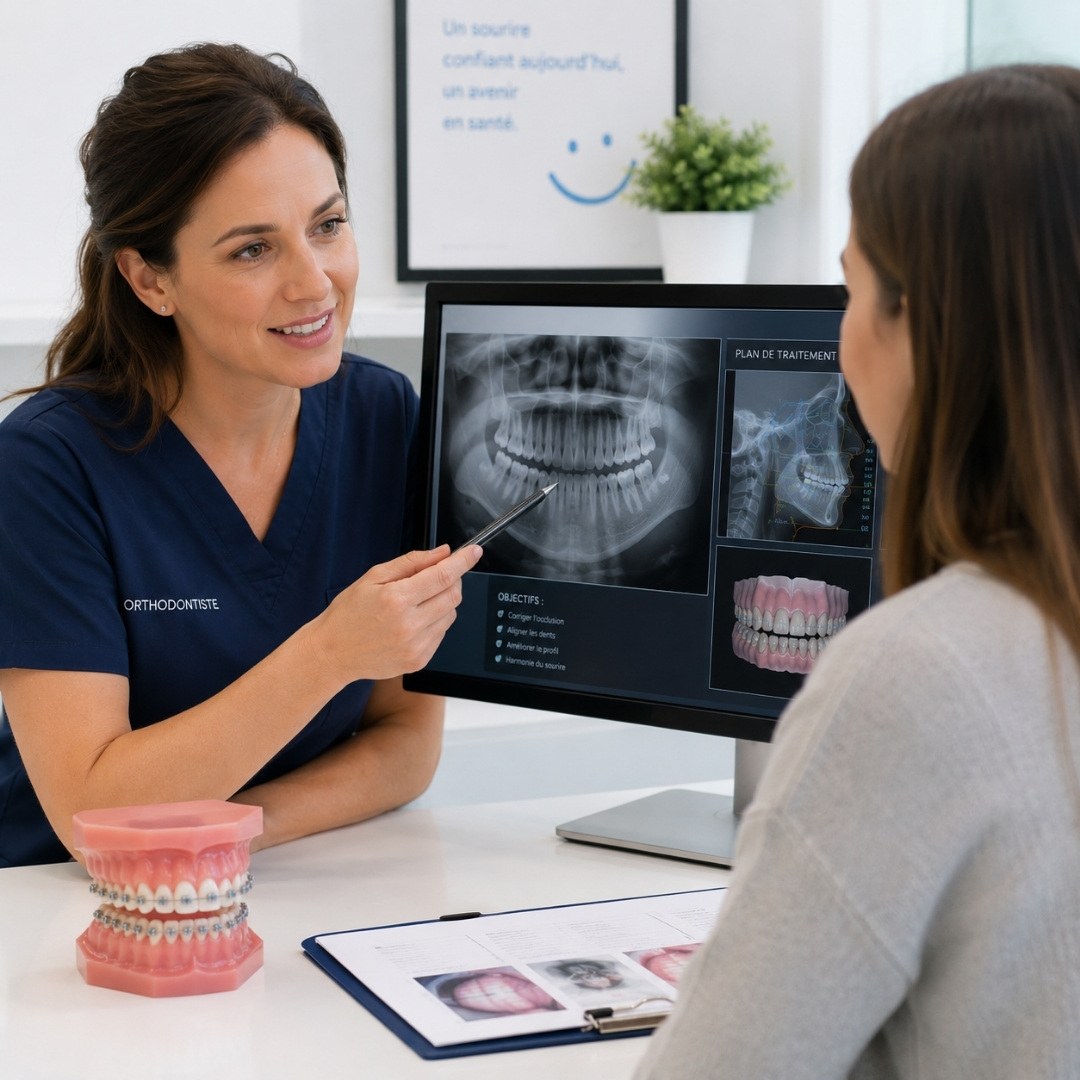
The first consultation allows us to assess the complexity of your case and the level of expertise required.
Archambault and Morton Orthodontists

Surgical (orthognathic) cases

Some situations require jaw surgery combined with orthodontic treatment. The main indications are:

  • Lower jaw too far back or too far forward
  • Anterior open bite (the upper and lower teeth do not touch)
  • Marked facial asymmetry
  • Severe gummy smile
  • Sleep apnea related to the anatomy of the jaws

Treatment process:

  • Pre-surgical orthodontic phase (12 to 18 months) — Preparation of the occlusion for surgery.
  • Surgery — Performed in a hospital setting by a maxillofacial surgeon.
  • Post-surgical phase (6 to 12 months) — Orthodontic finishes.
  • Lifetime restraint to stabilize the result.

Total duration: 2 to 3 years.

Coverage: the surgery is generally covered by the RAMQ (with a sometimes long waiting period) or performed privately. The orthodontic portion remains at the patient’s expense.

Impacted teeth

An impacted tooth is a tooth that does not erupt naturally. The most commonly affected are the upper canines, second premolars , and incisors.

Treatment steps:

  • 3D Cone Beam Volume Tomography (CBCT) Diagnostics
  • Creating space on the arcade
  • Exposed Tooth Surgery
  • Progressive orthodontic traction over 6 to 18 months
  • Finishing the alignment

Prognosis: Excellent when the case is taken care of in time — ideally between 11 and 14 years of age for canines.

Dental agenesis

Agenesis is the congenital absence of one or more teeth. Two approaches are possible:

  • Closing the gap — Adjacent teeth take the place of the missing tooth, preventing the need for an implant later.
  • Opening up the space — We preserve the space for a future implant or bridge.

The choice is always made in an interdisciplinary manner, in consultation with your dentist and, if necessary, a periodontist or prosthodontist.

Recurrence after an initial treatment

The most common cause of a recurrence is premature termination of restraint. But it can also reveal an occlusion problem that was not resolved during the first treatment.

Our approach:

  • Complete assessment of the case
  • Precise identification of the cause
  • Adapted retreatment plan
  • Rigorous lifelong restraint to prevent recurrence

Multidisciplinary treatment

Some cases require the collaboration of several specialists. The orthodontist then acts as a conductor : he plans and coordinates the interventions. The most common combinations:

  • Ortho + Periodontics
  • Ortho + Prosthodontics
  • Ortho + Surgery
  • Ortho + endodontics
  • Ortho + Sleep Medicine

Why refer a complex case to us

Several elements make the difference in the management of complex cases:

  • Specialized academic training — 3 years of residency after the Doctor of Dental Medicine degree
  • More than 16 years of cumulative experience
  • University teaching background
  • Interdisciplinary network established with other trusted specialists
  • 3D diagnostics available on-site

When to ask for a second opinion

It is perfectly legitimate — and even desirable — to seek a second opinion in the following situations:

  • When the proposed plan includes extractions or surgery
  • When the cost is very different from another quote received
  • When the diagnosis seems ambiguous or not very detailed
  • After unsatisfactory treatment
  • When the relationship with your clinic has deteriorated

A good clinic always encourages comparison.

Our Process

  • In-depth consultation of 60 to 90 minutes
  • Comprehensive diagnostic plan
  • Written treatment plan, with possible alternatives
  • Coordination of specialists when necessary
  • Followed by the same orthodontist from the beginning to the end of treatment
  • Reinforced compression to stabilize the result in the long term

    Are you looking for an orthodontist in Vaudreuil-Dorion?

    We welcome you with a smile!

    Archambault Morton Orthodontic Clinic offers different types of orthodontic treatments to patients of all ages. The orthodontist couple, Amy Archambault and Paul Morton, as parents, attach great importance to the welcome and orthodontic care reserved for the youngest.

    The clinic’s team makes every effort to provide toddlers, children, teenagers and adults with an ideal environment and to make their visit pleasant and easy.
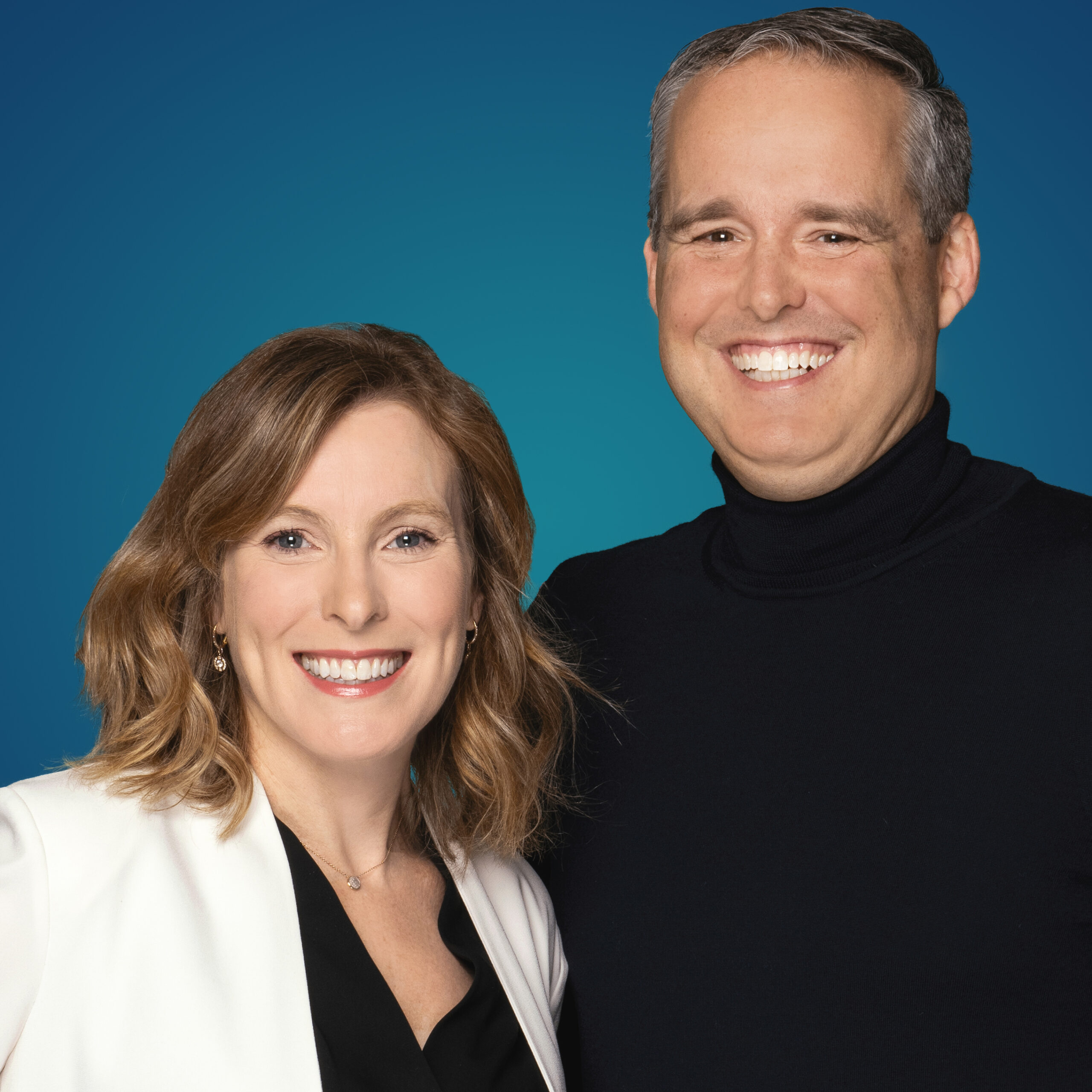
    Archambault and Morton Orthodontists

    Ready to book your first consultation?

    FINANCIAL OPTIONS AND INSURANCE

    Several payment and coverage options are available to you depending on your treatment. Our team helps you see things clearly.

    A FIRST CONSULTATION TO PREPARE!

    Before any treatment, the first consultation allows a clear diagnosis to be made and the next steps to be planned. This is the starting point.

    QUESTIONS?

    Our team is at your disposal to answer all your questions, before, during and after your treatment.

    Book a Free Consultation

    Fill out the form below to book a free consultation with our clinic.

    • Avez-vous des questions? Une demande ou de l'information supplémentaire à nous transmettre